Tajweed
Recite the Quran the way it was revealed
What is Tajweed?
Tajweed (التجويد) is the science of reciting the Quran the way it was revealed to the Prophet ﷺ. It gives each letter its correct articulation point, its proper characteristics, and its full rights in every ruling. It is the way the Quran has been preserved, sound for sound, for fourteen centuries.
“And recite the Quran with measured recitation (tarteel).”
Surah Al-Muzzammil 73:4
“The one who is proficient with the Quran will be with the honorable, obedient scribes (angels). And the one who reads the Quran and falters in it, finding it difficult, will have two rewards.”
Sahih al-Bukhari 4937, Sahih Muslim 798
“He is not one of us who does not recite the Quran beautifully.”
Sahih al-Bukhari 7527
Foundations of Qur'anic Recitation
The core terms and concepts every student of tajweed needs to understand.
Note: This guide applies specifically to Riwāyat Ḥafṣ ʿan ʿĀṣim, the most widely recited qirā'ah in the world today and the standard used in the majority of printed muṣḥafs.
Tajwīd
تجويدFrom the root ج-و-د, meaning to improve, perfect, or make excellent.
The science and practice of reciting the Qur'an correctly and beautifully by giving each letter its proper articulation and characteristics. In the context of the Qur'an, it means reciting the words of Allah as they were revealed: precisely, clearly, and with care.
Qirā'ah & Tilāwah
قراءة · تلاوةQirā'ah means reading; tilāwah means attentive, reflective recitation.
Both terms describe the act of reading the Qur'an, but tilāwah carries the deeper meaning of reciting with attentiveness, reflection, and adherence to proper method. Qur'anic recitation is not just reading text; it is the transmission of a preserved oral tradition passed from the Prophet ﷺ through generations.
Makhārij al-Ḥurūf
مخارج الحروفThe points of articulation.
The precise places in the mouth, throat, or nasal cavity where each letter originates. Seventeen points in total, grouped into five regions: throat, tongue, lips, nose, and the mouth cavity itself.
Ṣifāt al-Ḥurūf
صفات الحروفThe characteristics of letters.
The qualities each letter carries, such as heaviness (tafkhīm), lightness (tarqīq), or echoing (qalqalah). Together with makhārij, they ensure every letter is pronounced distinctly and correctly, since even slight changes in pronunciation can alter meanings.
Tajwīd preserves not only the beauty of the Qur'an, but also its accuracy and integrity. The Qur'an was revealed to be recited, and Allah commands: “And recite the Qur'an with measured recitation (tartīl).” (73:4)For this reason, learning and applying tajwīd is a means of preserving the exact words of the Qur'an as they were revealed and recited by the Prophet ﷺ, ensuring that its message remains unchanged across generations.
Applicability to Qirā'āt
How this guide relates to the other authentic recitations of the Qur'an.
Other riwāyāt differ in specific rules
Recitations such as Warsh, Qalun, and Khalaf may differ slightly in their application of tajweed rules, including elongations (madd), the treatment of hamzah, and certain pronunciation details. These differences stem from authentic variations rooted in classical Arabic dialects and were transmitted through reliable chains of recitation. As a result, some rules explained in this guide may not apply identically to other riwāyāt.
All are authentic and preserved
These variations reflect the diversity of classical Arabic dialects that were all correctly recited and approved by the Prophet ﷺ, and have been preserved exactly through continuous transmission. They highlight the richness, flexibility, and authenticity of the Qur'anic recitation tradition. If you would like to learn more about qirā'āt, riwāyāt, and the seven aḥruf, check the resources and books listed below.
The Four Levels of Recitation
Classical scholars defined four valid paces. All of them fully apply tajweed. They differ only in speed.
التحقيق
Tahqiq
Slowest
The most precise and deliberate pace. Every letter is given its full right, every rule observed openly. Used by beginners and teachers during instruction.
Use: Learning and teaching
الترتيل
Tarteel
Measured
The pace commanded in the Quran itself. Clear, calm, and reflective, with every rule applied correctly. Considered the ideal pace for most recitation.
Use: Daily recitation and prayer
التدوير
Tadweer
Medium
A pace between tarteel and hadr. Faster than tarteel but still fully observant of tajweed rules, including medium-length madd.
Use: Experienced reciters in prayer
الحدر
Hadr
Fast
The fastest permissible pace. All rules are still correctly applied, just briefly. Used by huffadh during review or long night prayers.
Use: Review and Tarawih for huffadh
Core Subjects of Tajweed
The major topics every tajweed course covers, in the order they are usually taught.
Makharij al-Huruf
Articulation Points
The exact place in the mouth, throat, or nasal cavity where each letter originates. 17 points grouped into 5 regions: throat, tongue, lips, nose, and mouth cavity.
Sifat al-Huruf
Characteristics of Letters
The qualities each letter carries: heaviness or lightness, softness or strength, whispering or voicing. Distinguishes letters that share the same articulation point.
Ahkam an-Noon as-Sakinah
Rules of the Silent Noon
Four rules that govern what happens when a noon sakinah or tanween meets another letter: Idhar, Idgham, Iqlab, and Ikhfa.
Ahkam al-Meem as-Sakinah
Rules of the Silent Meem
Three rules for the silent meem when followed by another letter: Idgham Shafawi, Ikhfa Shafawi, and Idhar Shafawi.
Al-Madd
Elongation
Rules for lengthening vowels. Includes natural madd (2 counts) and several secondary types that extend to 4, 5, or 6 counts depending on context.
Al-Qalqalah
Echoing
The slight bounce or echo applied to five specific letters (ق ط ب ج د) when they carry a sukoon. Essential for clear, well-pronounced recitation.
Tafkheem wa Tarqeeq
Heavy & Light Pronunciation
Some letters are always pronounced heavy (the seven letters of isti'la), some always light, and some vary by context, most notably the letter Ra.
Al-Waqf wal-Ibtida
Stopping & Starting
Where it is appropriate, necessary, forbidden, or preferred to stop, and how to resume correctly. Critical for preserving meaning.
Al-Ghunnah
Nasalization
The nasal sound held for roughly two counts on the letters noon and meem when they are shaddah or involved in certain rules.
Side-by-Side: Rules of the Silent Noon
The four rules for noon sakinah and tanween, shown together with triggering letters and a real example from the Quran.
| Rule | Meaning | Triggering Letters | Example | What Happens |
|---|---|---|---|---|
Idhar الإظهار | Clear pronunciation | ء ه ع ح غ خ The 6 throat letters | مَنْ ءَامَنَ | The noon is pronounced clearly, with no merging or nasalization. |
Idgham الإدغام | Merging | ي ر م ل و ن The 6 letters of yarmaloon | مَن يَّقُولُ | The noon merges into the following letter. With ي و م ن a ghunnah is held; with ل ر there is no ghunnah. |
Iqlab الإقلاب | Flipping | ب Only the letter ba | مِنۢ بَعْدِ | The noon is flipped into a hidden meem with ghunnah held for two counts. |
Ikhfa الإخفاء | Hiding | ت ث ج د ذ ز س ش ص ض ط ظ ف ق ك The remaining 15 letters | مِن كُلِّ | The noon is hidden between clear and merged, held with ghunnah for two counts. |
Which Path Should I Start With?
Three stages every serious reciter moves through.
Noorani Qaidah
Absolute BeginnerBest for: Learning to read Arabic letters for the first time
A short primer that teaches the Arabic alphabet, basic vowel marks, and introductory tajweed. The traditional starting point before opening the Mushaf.
- •Teaches the alphabet and sukoon, shaddah, madd basics
- •Usually finished in 1 to 3 months
- •A non-negotiable starting point for non-Arabic readers
Structured Tajweed Course
IntermediateBest for: After Qaidah, once you can read Arabic slowly
A step-by-step tajweed curriculum covering makharij, sifat, noon and meem rules, madd, qalqalah, and waqf. Usually 6 to 12 months.
- •Covers every rule systematically
- •Builds the foundation to recite any Mushaf correctly
- •Best done with a teacher for correction
Ijazah & Mastery
AdvancedBest for: Serious students who have completed a full tajweed course
Reciting the entire Quran to a qualified teacher with a connected chain of transmission (ijazah), usually in the Hafs riwayah or another qira'ah.
- •Connects you to the unbroken chain back to the Prophet ﷺ
- •Involves hundreds of hours of recitation under correction
- •The traditional qualification to teach tajweed
Deep Dives
Each topic has its own focused page with tables, worked examples, and practical notes.
Improving Your Recitation
Three consistent practices, plus natural mouth and lip usage.
OpenReading from the Mushaf
Visual cues that tell you which rule applies.
OpenMakharij al-Huruf
Articulation points by practical zone.
OpenHeavy & Light Letters
Tafkheem, tarqeeq, and conditional letters.
OpenMadd (Elongation)
All four madd types with count tables.
OpenQalqalah (Echo)
The five echo letters and how to release them.
OpenNoon Sakinah & Tanween
Idhar, Idgham, Iqlab, Ikhfa in full depth.
OpenWaqf (Stopping)
When to stop and what happens to the last letter.
OpenIt isn't practice that makes perfect.
It's perfect practice that makes perfect.
This is why a teacher matters so much in tajweed. Repeating a mistake a thousand times does not fix it, it locks it in. Every session you recite to a qualified ear, you correct the small errors you cannot hear in yourself, which is the difference between progress and plateau.
Tajweed Books in the Library
Printable Qaidah primers and full tajweed textbooks available in our library.
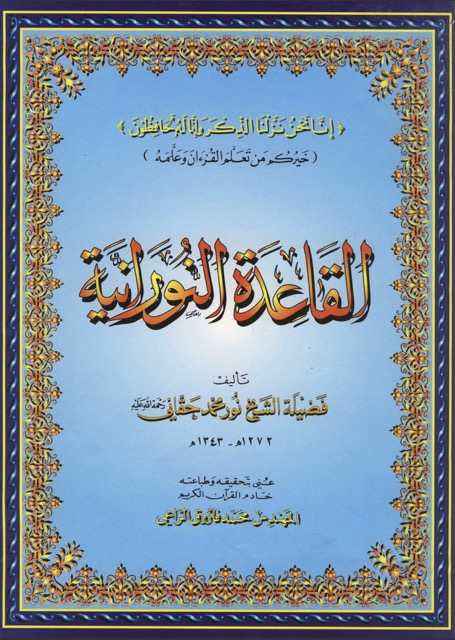
Al-Qaidah An-Noraniah
Sheikh Noor Muhammad Haqqani
_Medium.jpeg)
An Introduction to Tajweed (Al-Qaa'idah al-Qur'aaniyyah)
Qari Muhammad Idrees Asim
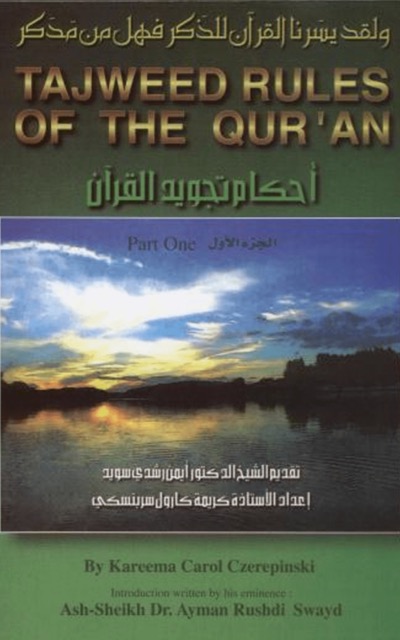
Tajweed Rules of the Quran Part 1
Kareema Carol Czerepinski
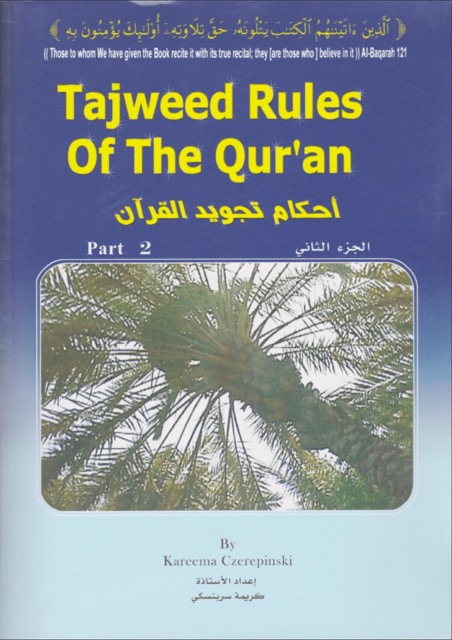
Tajweed Rules of the Quran Part 2
Kareema Carol Czerepinski
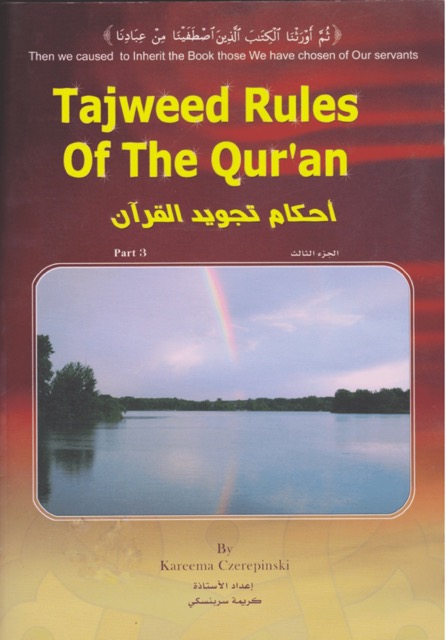
Tajweed Rules of the Quran Part 3
Kareema Carol Czerepinski
Famous Reciters
The voices most widely listened to for learning and daily recitation.
Shaykh Mahmoud Khalil al-Husary
1917 to 1980
The teaching standard
His Muallim (teacher) recording is the gold standard for students learning tajweed. Slow, precise, and used in classrooms worldwide.
Shaykh Muhammad Siddiq al-Minshawi
1920 to 1969
Voice of reflection
Famous for his moving Mujawwad (ornate) recitation. Loved for the depth of feeling in his voice.
Shaykh Abdul Basit Abdus Samad
1927 to 1988
Master of breath control
Legendary reciter known for incredibly long, fluid breaths. Three-time winner of the world's best reciter title.
Shaykh Mishary Rashid al-Afasy
b. 1976
Modern household name
Kuwaiti reciter and imam. One of the most widely heard voices on Quran apps today. Clear, gentle, and accessible.
Shaykh Abdur Rahman as-Sudais
b. 1960
Imam of Masjid al-Haram
Chief imam of the Grand Mosque in Makkah. His Taraweeh and Qiyam recordings are heard by millions in Ramadan.
Shaykh Maher al-Mu'aiqly
b. 1969
Imam of Masjid al-Haram
Beloved imam known for calm, reflective pace. A popular choice for daily listening and memorization.
Further Resources
Video courses and online tools for practice and correction.
Noorani Qaida for learning the Quran
Absolute Beginner · YouTube playlist
Learn Tajweed Easily
Beginner · YouTube playlist
30-day Tajweed Program
Intermediate · YouTube playlist
Quranic Arabic (Taught in Arabic)
Advanced · YouTube playlist
Quran.com
Read with tajweed-colored Mushaf, word-by-word translation, and verse-by-verse audio from dozens of reciters.
Tarteel AI
AI-powered recitation assistant. Listens as you recite and flags mistakes in real time. Great for solo practice.
Quranic Audio
Free downloadable recordings from nearly every well-known reciter, organized by surah.
Every Ayah
Verse-by-verse MP3s in multiple paces (Muallim, Mujawwad, Murattal). Excellent for listening while memorizing.
Common Questions
Do I need tajweed to read the Quran?+
Yes, at least the basics. The obligation is to pronounce letters correctly so that meaning is not changed. Without basic tajweed, many letters sound similar in English-trained ears but are actually different letters in Arabic, which can change the meaning entirely.
Is it sinful to read without perfect tajweed?+
No. The Prophet ﷺ said the one who struggles with the Quran receives two rewards. What is required is that you try to learn and that major errors (lahn jali) which change the meaning are avoided. Subtle errors (lahn khafi) are a matter of excellence, not sin.
Do I need a teacher?+
Strongly recommended. Makharij and sifat cannot be learned from books or videos alone because you cannot hear yourself accurately. A teacher catches what you cannot. If a qualified shaykh is unavailable, at minimum have a partner or use an AI tool like Tarteel.
Noorani Qaidah or jump straight into tajweed?+
If you can already read Arabic fluidly, start with tajweed. If you pause to decode letters, do Qaidah first. Skipping Qaidah when you still struggle to read is the most common reason tajweed students plateau.
What is the difference between tarteel and tajweed?+
Tajweed is the set of rules. Tarteel is a pace of recitation that applies those rules in a calm, measured way. Tajweed is what you learn, tarteel is one way you apply it.
Which qira'ah should I learn?+
In most of the world, Hafs 'an Asim is the standard and the one taught by default. Other qira'at like Warsh and Qalun are also authentic and widely recited in parts of Africa. Learn Hafs first unless your community uses another.